
The Church Year
Liturgical Calendar
The feasts, fasts, and seasons of the Syriac Orthodox Church year — guiding the faithful through the story of salvation from Nativity to Resurrection and beyond.
The Church Year
Feasts at a Glance
Showing — Change the year in the calculator below
Calculator
Feast Date Calculator
Select any year to calculate all movable feast dates. The Malankara Church follows the Gregorian Easter calculation since 1953 (Encyclical No. 620 of Patriarch Mor Ignatius Aphrem I).
Use the arrows, type a year, or pick the spinner — results update instantly.
Movable Feasts
Calendar 2025–2035
Principal movable feast dates, generated automatically from the Gregorian Easter.
| Year | Nineveh Fast | Great Lent | Hosanna | Pascha | Ascension | Pentecost | Qudosh Idto |
|---|---|---|---|---|---|---|---|
| 2025 | Feb 9 | Mar 2 | Apr 13 | Apr 20 | May 29 | Jun 8 | Nov 2 |
| 2026 | Jan 25 | Feb 15 | Mar 29 | Apr 5 | May 14 | May 24 | Nov 1 |
| 2027 | Jan 17 | Feb 7 | Mar 21 | Mar 28 | May 6 | May 16 | Oct 31 |
| 2028 | Feb 6 | Feb 27 | Apr 9 | Apr 16 | May 25 | Jun 4 | Nov 5 |
| 2029 | Jan 21 | Feb 11 | Mar 25 | Apr 1 | May 10 | May 20 | Nov 4 |
| 2030 | Feb 10 | Mar 3 | Apr 14 | Apr 21 | May 30 | Jun 9 | Nov 3 |
| 2031 | Feb 2 | Feb 23 | Apr 6 | Apr 13 | May 22 | Jun 1 | Nov 2 |
| 2032 | Jan 18 | Feb 8 | Mar 21 | Mar 28 | May 6 | May 16 | Oct 31 |
| 2033 | Feb 6 | Feb 27 | Apr 10 | Apr 17 | May 26 | Jun 5 | Oct 30 |
| 2034 | Jan 29 | Feb 19 | Apr 2 | Apr 9 | May 18 | May 28 | Nov 5 |
| 2035 | Jan 14 | Feb 4 | Mar 18 | Mar 25 | May 3 | May 13 | Nov 4 |
Fixed Dates
The Fixed Feasts
These feasts fall on the same date every year in the Gregorian calendar.
January 1
Circumcision of our Lord (Gzoorto)
ܓܙܘܪܬܐ
The Feast of the Circumcision of our Lord Jesus Christ on the eighth day, and the naming of Jesus.
January 6
Epiphany (Denho)
ܕܢܚܐ
The Baptism of our Lord in the Jordan River. In the Holy Land it is observed as the Nativity; elsewhere it marks the Theophany and Baptism.
February 2
Presentation at the Temple (Ma'alto)
ܡܥܰܠܬܐ
The Presentation of the Lord at the Temple — Simeon's canticle "Lord, now lettest thou thy servant depart in peace." Forty days after Christmas.
March 25
Annunciation (Sooboro)
ܣܒܪܬܐ
The Annunciation to the Most Holy Theotokos by the Archangel Gabriel. This feast is celebrated even if it falls on Passion Friday, when a special combined liturgy is used.
June 29
Feast of Sts Peter and Paul
Feast of the Holy Apostles Peter and Paul, preceded by the four-day Fast of the Apostles (June 26–29).
August 6
Transfiguration (Mtalé)
ܡܬܠܝܐ
Commemorating the Transfiguration of our Lord on Mount Tabor, witnessed by Peter, James and John.
August 15
Assumption / Dormition (Shunoyo)
ܫܘܢܝܐ
The Falling Asleep (Dormition) of the Most Holy Theotokos, preceded by the Fast of the Mother of God (August 10–15).
September 8
Birth of the Virgin Mary
The Nativity of the Most Holy Theotokos, the Mother of God.
September 14
Feast of the Holy Cross (Sleebo)
ܕܨܠܝܒܐ
Commemorating the discovery of the True Cross by St Helen, mother of Emperor Constantine, in AD 326. One of the Great Feasts of the Syriac calendar.
December 1
Nativity Fast Begins
The fast of the Nativity begins on December 1st (obligatory from December 15th), in preparation for Christmas on December 25th.
December 25
Nativity (Yaldo)
ܝܠܕܐ
The Feast of the Nativity of our Lord and Saviour Jesus Christ. The great feast of the Incarnation.
December 27
Remembrance of the Infants of Bethlehem
The commemoration of the Holy Innocents — the infants slaughtered by King Herod in Bethlehem after the birth of Christ.
Movable Feasts
Seasons of the Church Year
- Rogation of Nineveh (Nineveh Fast)
- 3-day fast observed on Monday–Wednesday, starting 3 weeks before the first Sunday of Great Lent. Commemorates the repentance of Nineveh (Book of Jonah).
- Great Lent (Saumo Rabo)
- The great fast before the Resurrection — 7 weeks beginning on the first Sunday. Strictly observed Monday–Friday; fish is permitted on weekends.
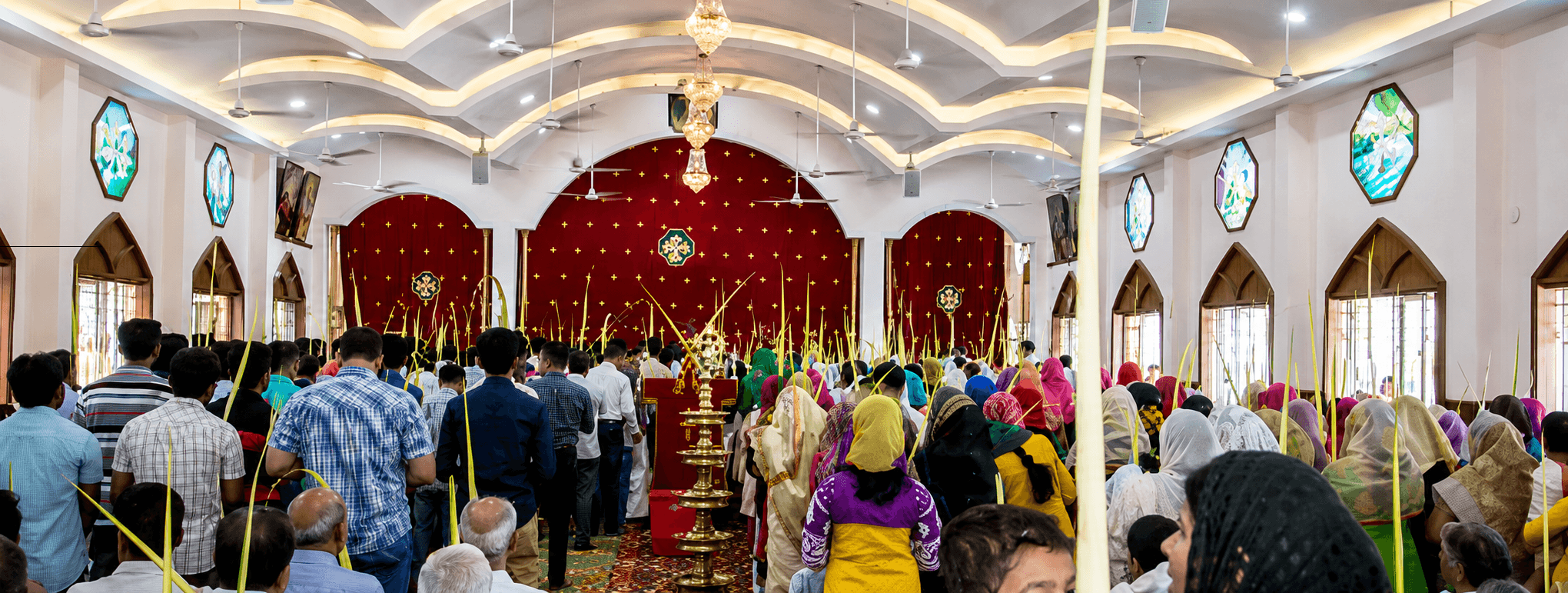
- Hosanna Sunday (Palm Sunday)
- The Sunday before Pascha, commemorating Christ's triumphal entry into Jerusalem. The start of Holy Week.
- Resurrection (Qyomto / Pascha)
- The Feast of Feasts — the Resurrection of our Lord Jesus Christ. Date determined by the Gregorian calendar since the 1953 Encyclical.
- Ascension (Suloqo)
- The Ascension of our Lord into heaven, observed 39 days after Pascha on a Thursday.
- Pentecost (Pentecostī)
- The descent of the Holy Spirit upon the Apostles, 49 days after Pascha. Also called the Feast of Weeks.
- Qudosh Idto (Consecration of the Church)
- The beginning of the Syriac Orthodox ecclesiastical year — the last Sunday of October if it falls on the 30th or 31st, otherwise the first Sunday of November.
The Syriac Orthodox ecclesiastical year begins with Qudosh Idto (Consecration of the Church) — falling on the last Sunday of October if it is the 30th or 31st, or else the first Sunday of November. The Sundays that follow until Christmas belong to the advent season, commemorating the chief events preceding the Incarnation of the Word.
The date of the Resurrection (Qyomto) is determined according to the rule of the Synod of Nicaea (AD 325): Easter is the Sunday following the first full moon after the spring equinox. The Church in Malankara switched entirely to the Gregorian calendar in 1953, following Encyclical No. 620 from Patriarch Mor Ignatius Aphrem I. Immovable feasts are now celebrated by the Gregorian calendar; the Julian calendar formerly determined lent and Holy Week.
The Rogation of Nineveh (Ba`uto d-Ninwaye) is a three-day fast observed Monday through Wednesday, three weeks before Great Lent begins. It commemorates Jonah's proclamation to the Ninevites and their repentance — one of the most distinctive observances of the Syriac tradition.